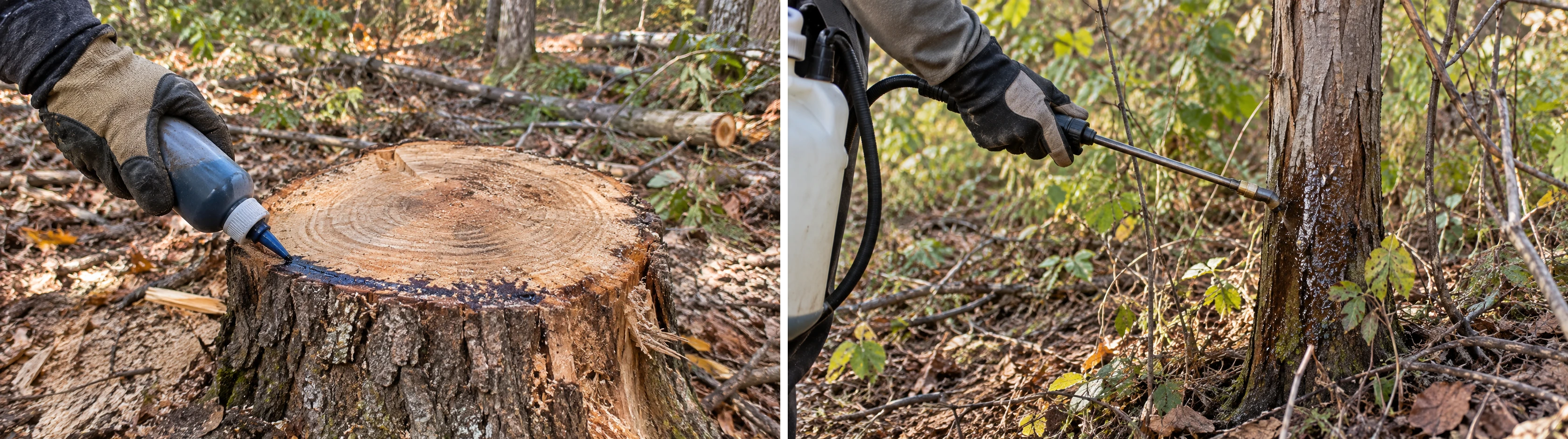

Rights-of-Way Vegetation Control in Summer Heat: Adjuvant Selection for Utility and Roadside Corridors
Brewer International Technical Team
Product Development & Agronomy
By mid-summer, most rights-of-way (ROW) applicators are working against the clock and the thermometer. Utility corridors, roadside easements, railways, and pipeline buffers all need consistent vegetation control to protect access, sightlines, and infrastructure — but the same heat that pushes brush and weeds into aggressive growth also works against the herbicide programs meant to control them. Getting adjuvant selection right this time of year is one of the most overlooked levers ROW applicators have for protecting performance.
Why Heat Changes the Rules
Herbicide efficacy depends on a plant's ability to absorb and translocate the active ingredient — a biological process, not just a chemical one. When air temperatures climb into the upper 80s and 90s (Fahrenheit), many target species shift into a heat- or drought-stress response: stomata close, cuticle wax thickens, and internal water and sugar transport slows. For systemic herbicides that rely on the plant moving the active ingredient from leaf to root — glyphosate among them — this can mean the product simply doesn't move as far as it needs to, even if it lands on the leaf exactly as intended.
At the same time, heat accelerates spray droplet evaporation before the leaf has a chance to absorb the solution. On a 95°F day with low humidity, a droplet that would sit on the leaf surface long enough for meaningful uptake in spring can flash off in a fraction of that time in summer. The result is reduced absorption, more product lost to volatility and drift, and — for applicators on a fixed treatment schedule — regrowth and call-backs that eat into the maintenance cycles ROW programs depend on.
Where Adjuvants Earn Their Keep
This is exactly the gap adjuvants are designed to close. A few categories matter most for summer ROW work:
- Non-ionic surfactants (NIS) reduce the spray solution's surface tension, helping it spread across the leaf rather than beading up and rolling off — a common problem with the waxy, drought-hardened foliage typical of brush and woody species by midsummer. Brewer's Cide-Kick, a 100% active nonionic wetting agent and penetrant labeled for ROW, forestry, and agricultural use, is built for exactly this kind of leaf-surface challenge.
- Humectants and drift-retardant adjuvants slow evaporation at the leaf surface, extending the window a plant has to absorb the herbicide before the droplet dries down. On corridors where applicators can't always control timing around the hottest part of the day, that extended window can mean the difference between a clean kill and a partial one. Brewer's Bark-Boost TA, a humectant labeled for forestry and ROW use, is one example of this category built to keep spray solution on the leaf longer.
- Methylated seed oil (MSO) and crop oil concentrate (COC) adjuvants help penetrate the leaf cuticle itself — which matters more, not less, as heat and drought thicken that waxy barrier. These are especially relevant for woody brush and resistant broadleaf species common along utility and roadside corridors. Brewer's SunEnergy+, an APE-free blend of methylated seed oil, organosilicon, and emulsifiers, is one example of an MSO-based penetrant built for this kind of challenge.
- Buffering and water-conditioning agents address a factor that's easy to overlook: many ROW applicators draw spray water from tanks, ponds, or municipal sources with variable hardness and pH, and hard water cations can bind to and deactivate certain herbicides before the spray ever leaves the nozzle. Summer's higher water demand often means pulling from less consistent sources, making buffering a bigger factor than it was in spring. Brewer's AMS-Brew, an ammonium sulfate-based water conditioner, is one example built to bind those hard water cations before they can interfere with herbicide performance.
Practical Guidance for Applicators
A few label-consistent adjustments can help protect performance without changing your herbicide program:
- Where the label allows, shift application timing to early morning or evening, when leaf surface temperatures and evaporation rates are lower and stomata are more likely to be open.
- Match the adjuvant to the target species' condition, not just the herbicide — heat-stressed, thick-cuticle brush generally benefits more from oil-based penetrants, while actively growing broadleaf weeds may respond well to a standard NIS.
- Test your water source for hardness and pH before mixing, especially from a new or seasonal source, and add a buffering or water-conditioning agent where hard water is a known issue.
- Never exceed labeled adjuvant rates to compensate for heat. Every herbicide label specifies approved adjuvant types and rates; the goal is optimizing within those limits, not working around them.
- Document conditions at application — temperature, humidity, and wind — so any regrowth or control issues can be diagnosed against actual field conditions rather than guesswork.
The Bottom Line
Summer heat doesn't have to mean lower control rates or shorter maintenance cycles. The plants aren't behaving any differently than they always do under stress — but the adjuvant program has to account for that behavior rather than assume spring or fall conditions still apply. For ROW programs where a missed treatment window means a full corridor re-visit, the adjuvant you choose is often a bigger performance lever than the herbicide itself.
Always read and follow the herbicide label for approved adjuvant types, tank-mix compatibility, and application restrictions specific to your product and site.