
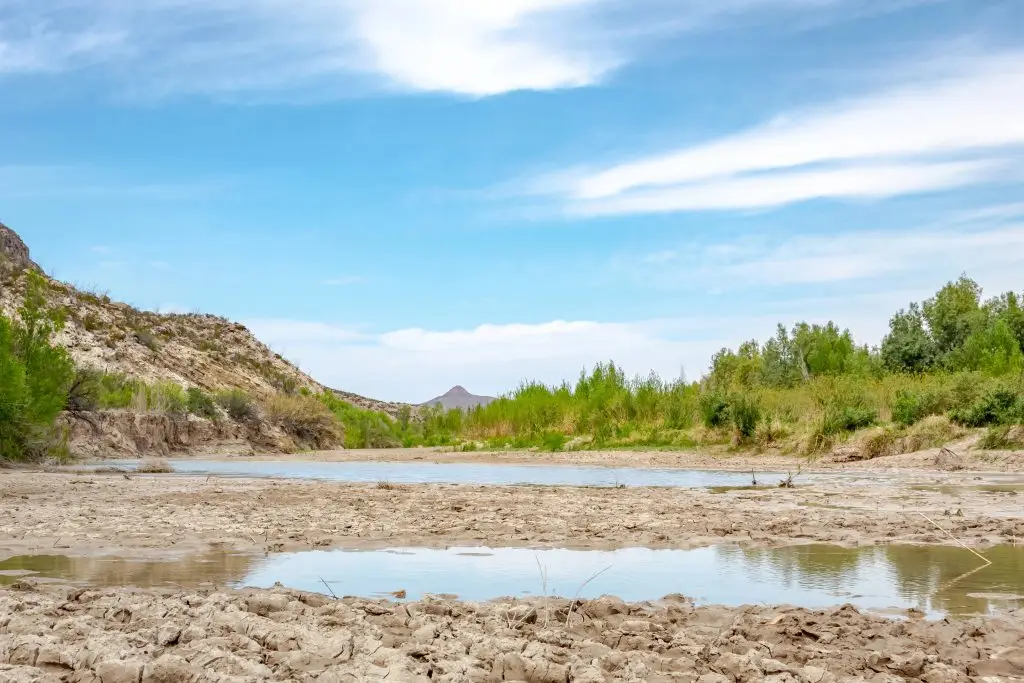
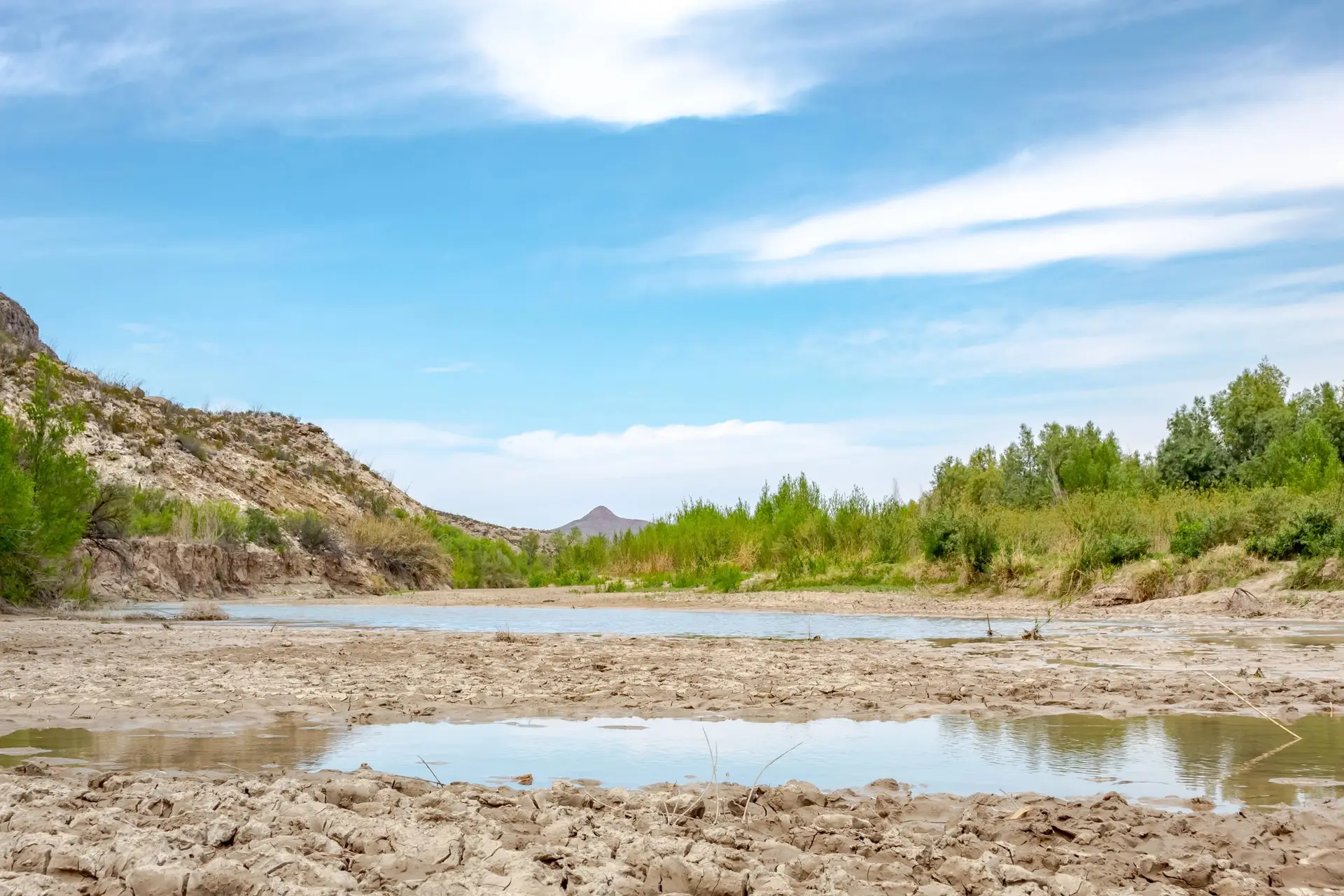
A drought is a period when an area receives significantly less rainfall than normal, and the environment can’t keep up with the water it’s losing. It isn’t just “a long dry spell”—it’s a measurable imbalance between water going out (evaporation, plant use, groundwater loss) and water coming in (rain, runoff, and inflow). In simple terms, nature’s water budget falls behind.
Drought is often viewed through the lens of terrestrial agriculture—wilting crops, drier soils, shrinking yields. But in aquatic environments, drought triggers an entirely different cascade of ecological responses. For pond managers, applicators, and aquatic weed-control professionals, drought conditions can dramatically alter both native aquatic vegetation and problematic aquatic weeds.
Understanding these dynamics is essential for planning treatments, selecting appropriate chemistry, and adjusting expectations about efficacy, drift, and long-term system behavior.
How Drought Alters Aquatic Ecosystems
When drought reduces rainfall and inflow, water levels decline and evaporation accelerates. In ponds, lakes, and slow-moving waterways, this creates several biological and chemical changes:
- Smaller water volume concentrates nutrients, salts, pesticides, and organic matter.
- Higher temperatures accelerate algal growth and stress aquatic animals.
- Shallower shorelines expose plant beds and favor opportunistic weeds.
- Reduced flow decreases oxygenation and slows nutrient export.
Each of these shifts impacts aquatic vegetation differently, with some plants declining while others explode in biomass.
Impacts on Native Aquatic Vegetation
Reduced Water Levels Stress Submerged Plants
Submerged native species like Ceratophyllum, pondweeds (Potamogeton spp.), and naiads rely on stable water columns to support their structure. When water levels drop:
- These plants may experience light stress as water becomes shallower and more turbid.
- Physical exposure from drawdown can kill submerged tissues outright.
- Higher temperatures and lower oxygen levels can damage root systems.
Many beneficial native plants decline during prolonged drought, leading to a temporary loss of habitat complexity for fish and invertebrates.
Shoreline Plants May Initially Benefit
Some emergent native plants—cattails, pickerelweed, arrowhead—can colonize newly exposed mudflats. However, if drought becomes prolonged:
- Root zones dry out.
- Competition from terrestrial weeds increases.
- Some emergent plants undergo dieback as soils harden.
The variability depends largely on soil moisture, slope, and exposure time.
Drought’s Impact on Aquatic Weed Control
For applicators working with aquatic herbicides and adjuvants, drought conditions alter both treatment timing and product performance.
A. Increased Concentration of Herbicides
Lower water volume increases the concentration of water-dispersed actives, raising both efficacy and potential plant stress. This can be beneficial or harmful depending on the target species.
Adjuvant implications:
- Drift control becomes essential.
As ponds shrink, treatment zones often sit closer to docks, ornamentals, or sensitive native vegetation. Drift-reducing adjuvants help keep deposition where it’s intended. - Droplet retention becomes more critical on emergent weeds and mats newly exposed by drought.
Plants growing at the shoreline or on mudflats often accumulate dust, clay, or waxy deposits; wetter-spreader chemistries improve adherence to these surfaces. - Evaporation rates increase, making droplet drying a real concern.
Fast-drying droplets reduce systemic herbicide uptake. Humectant-containing adjuvants slow evaporation and improve penetration.
B. Higher Water Temperature Affects Chemistry
Warm water can:
- Accelerate the degradation of some herbicides.
- Increase plant uptake rates.
- Boost metabolic activity in target weeds.
Some products become more effective; others lose persistence. Drought narrows the margin of error. Adjuvants must be selected with uptake rates in mind, not just coverage or spreading.
C. Greater Risk of Oxygen Crash
Drought-induced oxygen depletion heightens the risk of a fish kill following herbicide application. When adjuvants dramatically improve herbicide uptake, weeds die more rapidly, worsening the oxygen crash.
As a result:
- Use moderate-intensity adjuvants to avoid overly rapid biomass collapse.
- Gradual or sectional treatments become essential.
- Slow-release formulations or adjuvants that extend droplet hydration can reduce shock to the system.
In some drought scenarios, the goal is controlled decline, not maximum kill rate.
D. Dense Mats Reduce Herbicide Penetration
In floating weed outbreaks (duckweed, watermeal, salvinia, surface algae), drought may produce mats so thick that:
- Spray coverage becomes insufficient.
- Surfactant selection becomes more critical.
- Penetration and spreading characteristics are more important than ever.
Adjuvant Implications:
- High-penetration surfactants are needed to overcome wax-layer resistance.
Standard nonionic surfactants may spread well but fail to break hydrophobic layers. - Mats may physically block droplet entry, requiring adjuvants that reduce surface tension aggressively enough to carry actives beneath the canopy.
- Silicone surfactants (organosilicones) can be effective, but in drought conditions they sometimes overspread, causing product runoff on floating leaves. Blends with moderated spreading often perform better.
- Oil-based adjuvants can assist with cuticle penetration but raise concerns in oxygen-poor systems that are already stressed.
Drought reshapes aquatic ecosystems in complex ways. While native submerged vegetation often declines, opportunistic aquatic weeds—especially those adapted to shallow, nutrient-dense environments—frequently thrive.
Brewer Product highlights for products that work great in drought conditions; Silnet+, SilEnergy+. AMS-Brew and Aqua-Boost+