101 guidesDecember 19, 2025
Prevent Hazards Before They Happen: Storage Tips for Pesticides and Adjuvants
Brewer International Technical Team
Product Development & Agronomy
The winter months remain the prime time for managers to purchase pesticides and adjuvants in preparation for the upcoming season. However, buying these products is only the first step—proper storage is critical to protect human health, prevent environmental contamination, and maintain product integrity. Inadequate storage can lead to serious hazards, including chemical reactions, fires, and ecological damage.
Why Proper Storage Matters?
Pesticides and adjuvants are chemical substances that may contain flammable compounds, oxidizing agents, or corrosive chemicals. Improper storage can result in accidents, product degradation, and regulatory violations.
Common Hazards in Storage
- Flammable Compounds
Many pesticides contain petroleum-based ingredients that can ignite if exposed to heat or sparks. They must be kept away from ignition sources. - Oxidizing Substances
Some pesticides react easily with other chemicals. These should only be stored with compatible oxidizers to prevent dangerous reactions. - Corrosive Chemicals
Acidic pesticides can corrode metal surfaces and react violently with incompatible substances, potentially causing explosions.
Understanding Chemical Hazards
Two key concepts govern pesticide safety:
- Toxicity: The inherent ability of a chemical to cause harm.
- Hazard: A function of toxicity and exposure.
Types of Chemical Hazards
- Health Hazards
Exposure can lead to skin irritation, respiratory issues, organ damage, and chronic conditions such as heart disease or high blood pressure. - Physical Hazards
Risks include explosions, fires, corrosion, leaks, and spills—each capable of causing significant financial and safety losses. - Environmental Hazards
Chemical leaks can contaminate soil and water, harm wildlife, and contribute to air pollution and acid rain.
Guidelines for Avoiding Storage Hazards with Pesticides
Storage Facility Guidelines:
- Use a dedicated, isolated building for pesticides and adjuvants.
- Locate the facility away from populated areas and water sources.
- Ensure the building is lockable, with access restricted to trained personnel.
- Install temperature monitoring systems to prevent freezing or overheating.
- Construct with fire-resistant materials and equip with dry chemical fire suppression systems (not water sprinklers).
- Provide emergency eyewash stations, soap, and water.
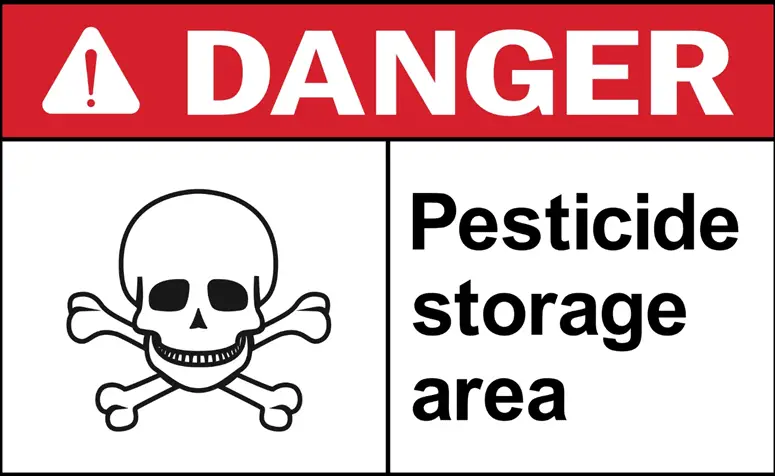
- Post warning signs and maintain spill kits on-site.
- Implement stormwater management to prevent runoff contamination.
Product Storage Guidelines
- Keep products in original labeled containers.
- Close lids and tops securely.
- Store liquid containers on pallets to prevent rusting.
- Inspect containers regularly for leaks or deterioration; dispose of compromised products safely.
- Track inventory using digital systems (RFID or barcodes) to monitor shelf life and reduce waste.
- Avoid overstocking—use just-in-time purchasing based on historical usage.
General Safety Guidelines
- Never store pesticides near food, feed, or water.
- Separate incompatible products (e.g., hormone-type pesticides from fertilizers).
- Keep personal items out of storage areas.
- Avoid placing glass containers in direct sunlight.
- Store combustible materials away from heat sources.
Special Considerations for Adjuvants
Adjuvants such as surfactants and oils often have temperature sensitivity and can separate or degrade if frozen. Always check manufacturer guidelines for minimum storage temperatures and avoid prolonged exposure to extreme conditions.
Emergency Preparedness
- Maintain a spill response plan and train staff on emergency procedures.
- Keep PPE stations accessible.
- Post emergency contact numbers prominently.
Safety is the cornerstone of pesticide and adjuvant storage. Limiting quantities, monitoring conditions, and ensuring only trained personnel have access are essential steps to prevent hazards and comply with current regulations.
Brewer International has been a leader in land and water chemistry since the 1980s and for over 40 years has proudly served its national and regional distributors.
Our products are used widely across the United States in agriculture, aquatics, forestry, rights of way, and land management.
Our customers trust our dedication to quality ingredients, tried and true formulas, and positive outcomes.